
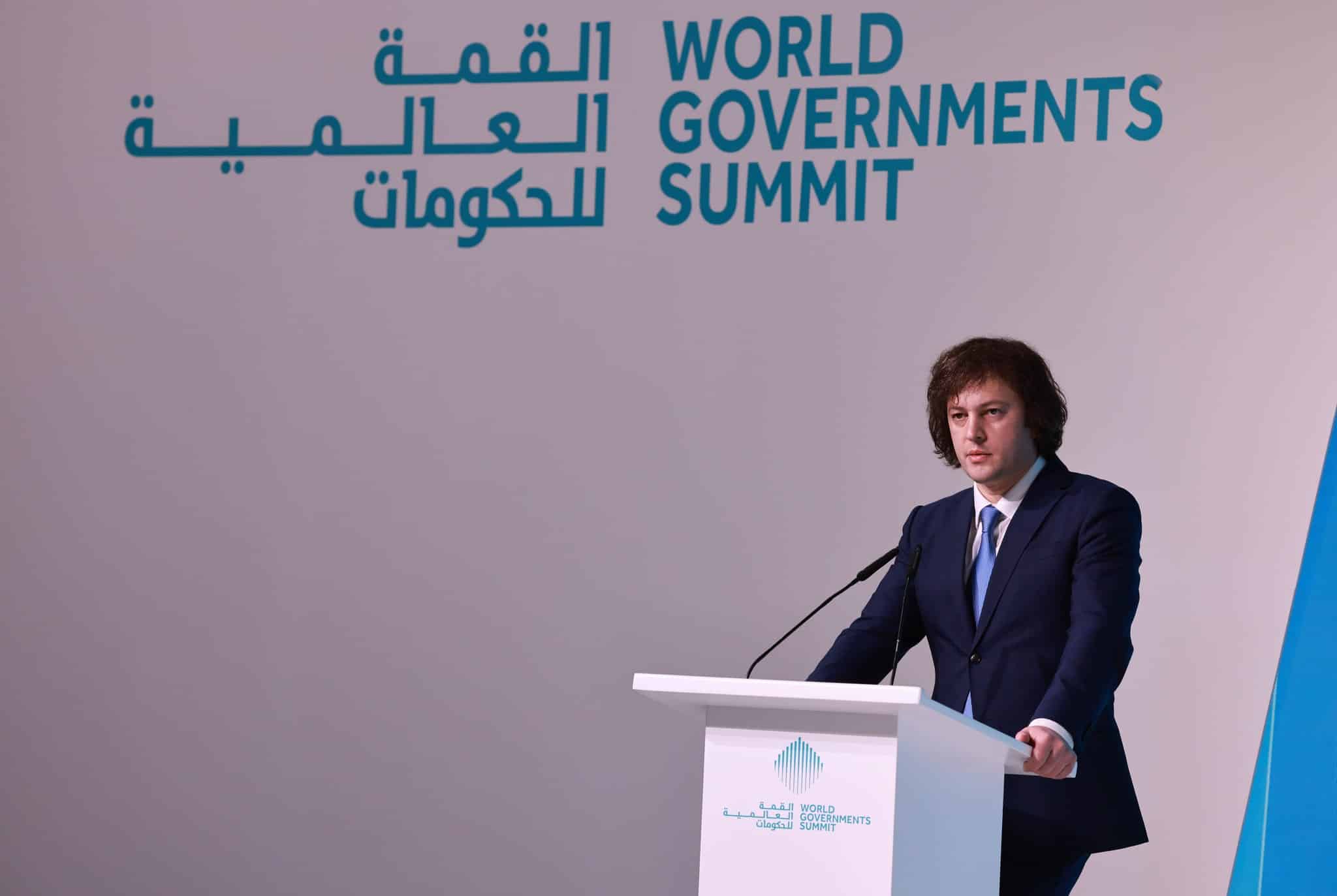
Georgia’s Prime Minister, Irakli Kobakhidze, took part in the World Government Summit, hosted by the United Arab Emirates in Dubai from February 3 to 5. The high-level international forum brought together heads of government, policymakers, and global leaders to discuss key issues shaping the future of governance, innovation, and investment.
As part of the summit’s agenda, Prime Minister Kobakhidze delivered a speech on February 3, highlighting Georgia’s economic progress, reform agenda, and investment opportunities. He also participated in a roundtable discussion focused on the future of global investment, where leaders exchanged views on emerging trends, economic resilience, and strategies for sustainable growth.
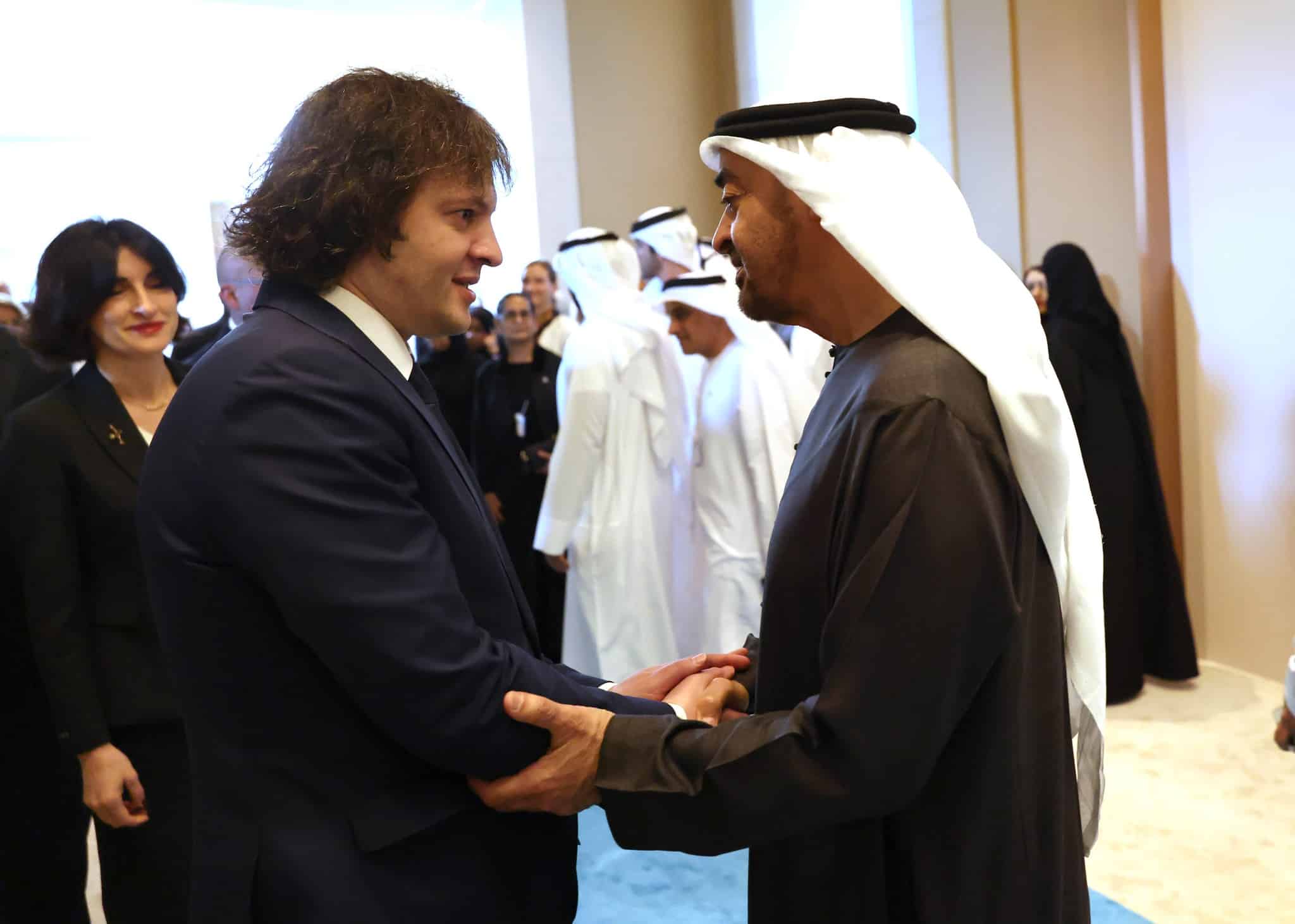
During his visit, the Prime Minister held a series of bilateral meetings with international counterparts and representatives of global institutions, aimed at strengthening cooperation and promoting Georgia as an attractive destination for investment and partnership.
Prime Minister Kobakhidze attended the summit with a high-level delegation that included Vice Prime Minister and Minister of Defence Irakli Chikovani, Minister of Foreign Affairs Maka Botchorishvili, Minister of Economy and Sustainable Development Mariam Kvrivishvili, Minister of Justice Paata Salia, Minister of Education, Science and Youth Givi Mikanadze, and Head of the Government Administration Levan Zhorzholiani.
The visit underscored Georgia’s commitment to deepening international partnerships and positioning itself as a competitive and forward-looking economy on the global stage.
“We have a liberal economic policy that contributes to economic growth. Tax rates are very low, and we have the right tax policy, which creates favourable conditions for investment activities in Georgia,” said Georgian Prime Minister Irakli Kobakhidze, addressing the round-format meeting Future of Investments held within the framework of World Government Summit 2026 in Dubai.
According to the PM, the country has a simple bureaucracy, which creates good conditions for economic activity.
“We have a simple bureaucracy, which creates good conditions for economic activity. Moreover, we can proudly say that the economy is managed effectively. The corruption level is low. If you look at international and global indices, Georgia is one of the leaders, while it ranks in first place in the region with a low level of corruption. We have better indicators than 8-9 EU member states. All this creates good conditions for ensuring economic growth in Georgia, and this is our vision: to create a favourable environment for foreign investors for their economic activities. This attitude works well,” he said.
“The Middle Corridor, connecting East Asia to Europe through Central Asia, the Caucasus, and Turkey, offers something increasingly rare in today’s world: a stable, reliable transit route that transcends geopolitical divides,” said Georgian Prime Minister Irakli Kobakhidze, addressing the World Government Summit 2026.
According to the Georgian PM, in a world where traditional routes are unreliable, alternative corridors become essential.
“The question before us today is not whether this transformation is happening – it clearly is. The real question is how we respond. How do we build a trading system resilient enough to withstand geopolitical shocks, yet open enough to continue delivering prosperity.
In a world where traditional routes are unreliable, alternative corridors become essential. In a fragmented global economy, countries capable of bridging divides become invaluable. And in an era of uncertainty, stability itself becomes a strategic asset.
The world does not need less trade – it needs more resilient trade. It does not need isolation – it needs intelligent diversification. And it does not need to choose sides – it needs reliable bridges between them. This brings us to the Middle Corridor, which is no longer simply an option, but an imperative for global commerce.
The Middle Corridor, connecting East Asia to Europe through Central Asia, the Caucasus, and Turkey, offers something increasingly rare in today’s world: a stable, reliable transit route that transcends geopolitical divides,” he said.
