
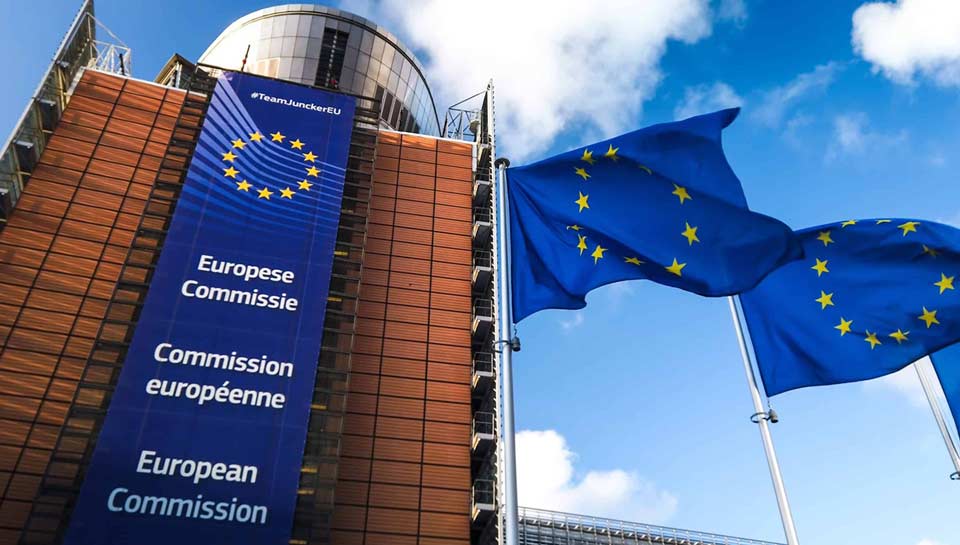
The European Commission’s 2026 meta-study recognizes Georgia as a key strategic corridor linking the European Union with Central Asia and outlines development priorities for the Trans-Caspian Transport Corridor (the “Middle Corridor”).
According to the document, the Anaklia Deepwater Port is designated a strategic priority within the expansion of the Trans-European Transport Network (TEN-T). The study emphasizes its full integration with rail and highway infrastructure.
It also notes that the port — currently under construction by a Chinese consortium — is expected to become the largest transport hub in the Black Sea region, significantly strengthening Georgia’s role in international trade.
“The Black Sea Submarine Cable (BSSC) – key planned initiative, with the fibre component alone estimated at €70–90 million. The cable will directly connect Georgia with Romania,” the document says.
The combined energy and digital project is valued at approximately €2.3 billion and is expected to position Georgia as a regional digital hub.
The study identifies several critical infrastructure projects, including the East–West Highway sections Chumateleti–Argveta and Zemo Osiauri–Chumateleti, as well as the Kobuleti bypass. It also recommends building a new bridge over the Rioni River and modernizing access roads as part of a congestion-reduction package.
Rail modernization is another priority. The document calls for the introduction of the European Rail Traffic Management System (ERTMS), locomotive upgrades, and a modern rapid cargo reloading system at Akhalkalaki station on the Baku–Tbilisi–Kars railway.
Two major logistics hubs are highlighted: Kutaisi, located along the East–West highway, and Tbilisi, which will serve as a central cargo distribution point.
Both centers are planned to meet modern international standards.
The study also frames Georgia as a future regional center for energy independence and green energy exports. It highlights the country’s renewable energy potential, green hydrogen production and export capacity, and the Black Sea energy cable project, noting that hydrogen exports could contribute to Europe’s decarbonization goals.
In the digital sector, the Commission outlines plans to develop Georgia into a regional hub through submarine cables linking Asia and Europe via the Caspian and Black Seas, the creation of an internet exchange center in Tbilisi, and expanded broadband access in rural areas through the Log-in Georgia and REDI programs.
The document stresses compliance with European standards, including the rollout of digital customs systems (NCTS and SEED), the creation of a unified digital platform linking ports, customs, and railways, and the implementation of EU cybersecurity and 5G security standards.
According to the study, several major international institutions are financing infrastructure projects in Georgia: the European Investment Bank is supporting road infrastructure, the European Bank for Reconstruction and Development is funding railway modernization and logistics, and the World Bank is investing in energy projects.
According to a study, Georgia’s transport infrastructure is conceived as a direct extension of the European network.
In its conclusion, the European Commission describes Georgia as a gateway along the Middle Corridor and a regional energy and digital hub, emphasizing that the country’s infrastructure modernization and alignment with European standards are directly linked to Europe’s economic security and trade stability.
Arkan Property specializes in premium real estate, helping clients find profitable investment opportunities and comfortable homes in the most desirable locations.
